
I thought my blog readers would enjoy this 2.5 minute interlude video from the Heart Math Institute. The Music alone is worth the viewing, and the information is enlightening. Enjoy!
I thought my blog readers would enjoy this 2.5 minute interlude video from the Heart Math Institute. The Music alone is worth the viewing, and the information is enlightening. Enjoy!
My wife, who is a master’s level professional counselor, just brought to my attention an interview in the current issue of The SUN magazine by Arnie Cooper of Christopher Lane, “Side Effects May Include – On What’s Wrong With Modern Psychiatry.” In the interview, Lane, an English professor specializing in Victorian literature and intellectual history, exposes the hard facts about how mental “diseases” are reportedly multiplying. Apparently new disorders are being added to the Diagnostic and Statistical Manual of Mental Disorders (DSM) every year.
In his tenacious endeavor to find answers as to why so many of his own students were on anti-anxiety and anti-depressant drugs, and as to the emergence in 1980 of dozens of new mental disorders in the third edition of the DSM — such “curious-sounding” diagnoses as “‘social phobia'” and “‘avoidance personality disorder'” — and especially as to “how and why those new disorders had been approved for inclusion [in the DSM] and whether they were really bona fide illnesses,” Lane found, to his dismay but not surprise, an active involvement of Pharmacia & Upjohn, the drug company who makes the anti-anxiety drug Xanax, “especially in the promotion of ‘panic disorder.'” He also found evidence of sloppy research and “dismissal of nonmedical approaches to psychiatric problems, and a degree of inventiveness with terms and symptoms that struck him as playing fast and loose with the facts.”
When asked “Are we getting sicker, or is something else at play?” Lane’s answer reminded me of the phenomenal growth in size of the Physicians Desk Reference (PDR) over the last 50 years I’ve been in practice. I used to be able to hold the book in one hand and turn the pages with the other. Now, I have to place it on a table or desk to even handle it. It grew in thickness from about two inches to six, and much of that growth is due to the increase in new drugs that treat the side effects of drugs, what are called “iatrogenic (doctor-caused) diseases.” Are we getting sicker or have we become a drug-addicted and drug-damaged society? Lane’s answer is worth excepting from the interview:
The way psychiatrists define mental illness has itself changed radically. The first two editions of the DSM focused on observable traits and behaviors in patients, which were often described as “reactions” to particular incidents or stressors. When the third edition came out in 1980, it defined virtually everything as a “disorder,” which connotes an innate, lifelong malfunctioning of the brain rather than a moment of psychological distress that might be due to a brief change in circumstance. This new method of defining mental disease has completely transformed the way mental-health professionals and the general public think about it.
When asked again if it is possible that we are in fact getting sicker, he responded with alarming words about how the industry is viewing our children:
I think it’s difficult to gauge that accurately. If you follow the APA’s line [American Psychiatric Association], then most definitely we’re seeing epidemic rates of social anxiety disorder and bipolar disorder, with the latter expanding by an eye-popping 4,000 percent. But how did that massive increase come about? It’s due almost entirely to the fact that the DSM-IV formalized bipolar as a mental disorder among children. Before that, bipolar disorder was understood to be exclusively an adult phenomenon. Psychiatrists like to revise everything backward, to rewrite the past in terms of their current terminology. Doing so makes their new terminology seem natural, even inevitable. There are more than a hundred more mental disorders in the DSM today than we had in 1968, including incredible new ones such as “sibling-relational problem” and even “partner-relational problem.” But I’m not convinced that the introduction of new illnesses means that more people are actually sicker.
Lane then goes on to say this about the quality of the APA’s trials in determining the criteria for mental illness:
I have extensively researched the APA archives and can attest that their judgments were often flimsy and their rationale for including new disorders questionable, based as they were on anecdotal evidence, ambiguous clinical research, and highly inconclusive trials. One of the consultants for the DSM-III, Theodore Millon, admitted to The New Yorker in 2005 that there was little systemic research; much of it, he said, was inconsistent and hodgepodge. He was an active participant on the DSM committee.
Lane’s research seeded and spurred the authoring of his book in 2007, Shyness: How Normal Behavior Became a Sickness, in which he shares his observations of the evolution of the understanding of mental disorders which gradually began to include normal reactions to one’s environment and upbringing. Such normal behavior began to be seen as “innate conditions of brain chemistry, resulting from problematic levels of neurotransmitters, especially serotonin.” Under the expanded guidelines of the DSM, anyone who is shy stands the risk of being diagnosed as mentally ill.
GOOD NEWS TO THE DRUG INDUSTRY
“The new disorders were obviously music to the ears of drug companies,” he says, “insofar as they massively increased the market for their products, which the media greeted with incredible enthusiasm.” Of course the media would be enthused. In 2000 alone GlaxoSmithKline spent $92 million on direct-to-consumer advertising on a single drug, Paxil, a drug that has so many side effects and such dubious results that the company seriously considered shelving it only to turn around and make a blockbuster out of it with an annual revenue surpassing $1 billion. As Lane points out, they have to create and sell the disease to the public before they sell the drug. The expectation is that we will self-diagnose and hurry to our local pharmacy to buy their new product.
Are we going to continue allowing the drug industry to invent diseases and determine what behaviors and symptoms are to be included in the DSM as illnesses based on what new drugs they’ve developed that need a disease to treat and a shelf to fill in the drugstore?
“EMOTIONAL BLUNTING” A SIDE EFFECT
One of the side effects of all this massive consumption of antidepressants and antipsychotic drugs is described as “emotional blunting,” a widely noted and studied phenomenon where people on these drugs may show little if any strong emotion in the face of catastrophes and environmental crises, such as the BP oil spill in the Gulf of Mexico, or sensitive enough moral and ethical judgement that allowed space for risky bank practices and real estate speculation. Lane decries the lack of resistance on the part of Americans to Bush’s $4 trillion illegal and ill justified Iraq war, an economic setback that conservatives among us appear to have conveniently forgotten as they blame our present economic crisis on our Democratic President. Are we as a nation over-drugged to the point of emotional numbness where we can’t think clearly or feel compassion and consideration anymore?
IS THERE A RISK TO PUBLIC HEALTH? TO OUR CHILDREN?
Traces of Lithium are showing up in municipal drinking water, not to mention the homeopathic coding of our drinking water by the mere presence of these traces of antidepressants, antibiotics and other prescription drugs in the water. Mass medication is taking place without public awareness, much less outcry. There’s no public outcry either against the forced drugging of our children with amphetamines (Adderall and Ritalin – read my blog on this) instead of giving them a healthier alternative to sugar and caffeine laden soft drinks and refined carbohydrate snacks, although there is finally some movement in that direction by our school system.
Lane says that undergraduates are taking “neuroenhancers” . . . in large numbers . . . apparently not recognizing the difference between caffeine and what is essentially refined amphetamines. To the extent that real learning and deep efforts in creativity are being replaced by adjustments in brain chemistry — potentially involving tens of thousands of students across the country — I would consider that a risk to public health, to say nothing of a phenomenon that should raise concerns about academic integrity and cheating
A CHANGE IN PERCEPTION AND CONSCIOUSNESS NEEDED
I’ve cited this interview as an example in the healthcare industry of how the field of professional medical providers will gladly accommodate our demand for drugs to alleviate our pain, be it physical pain or mental anxiety and depression. That demand arises largely out of the way we perceive ourselves, our pain and mental anxiety, and the state of consciousness in which we form our perceptions, most of which are based on beliefs we’ve held since childhood.
An example that readily comes to mind is the automatic assumption, when pain arises, that something is wrong and a doctor is needed to tell us what’s wrong and give us something for the pain, preferable find and correct the cause of the pain so that we won’t need the pain killer — which is what I do as a holistic physician and people respond favorably to that kind of rationale.
NOTHING IS WRONG! EVERYTHING MATTERS!
My approach to pain and illness is that nothing is wrong but the symptoms do matter. The symptoms of pain and anxiety are important messages from the body that a change is needed in the way I’m living life. They matter, in other words, and we are not wise in our rush to turn off the symptoms with drugs, or high potency vitamins and herbs, for that matter, and thereby miss the message. For unless the message is properly perceived and duly heeded, the symptoms will return, only next time louder and more attention grabbing, for which the doctor will prescribe yet stronger medicine and/or more invasive procedures. So, while dealing with the pain for relief, let’s discover what the pain alarm is about so we can address the underlying cause.
A typical example of what I’m saying occurs in my practice on a regular basis. The patient presents with a chronic back pain for which various doctors, including chiropractors, were consulted and treatments rendered with no lasting results. Being a chiropractor, I naturally look for a structural problem, such as a hip or spinal vertebra out of alignment irritating a nerve root. But that’s already been done, so I listen more deeply and broaden my perception while tracing the symptoms back to uncover a deeper and perhaps more obscure and subtle cause. Invariably, upon muscle testing and a comprehensive investigation into the patient’s case history and life style habits, a bladder infection more often than not reveals itself. So we treat the bladder infection for a period of time with herbs and nutritional protocols and the chronic back pain goes away for good.
Another example is the chronic neck ache, the crick in the neck that just won’t go away, even with chiropractic adjustments. So we listen and look deeper for less obvious causes and invariably a lymphatic congestion reveals itself as the cause, resulting in lymph node swelling and tenderness in the neck So, we treat the lymphatics with herbs and homeopathic solutions and the crick in the neck, as well as the recurring or lingering headache, clear up. An adjustment wasn’t needed after all . . . nor muscle relaxers.
Often a stiff neck is simply a physiological response to emotional stress, the body asking for deeper issues to be dealt with and resolved. Here is where true counseling is needed. I offer BioEnergetic Synchronization Technique (BEST) as a non-invasive treatment for emotional and mental stress issues. Basically it’s a way of desensitizing emotional “buttons” that are being pushed by triggers in one’s environment and social setting.
We will continue with this theme next blog post with a consideration of some alternative approaches to depression and mental illness, as well as a look at how we can go about changing our perception and consciousness around health issues in general. Until then, consider a drug-free life style.
To your health and healing,
Dr. Tony Palombo
Visit me on the Web at www.healingandattunementl.com and visit my Healing Tones blog for inspirational reading. We are considering the significance of the Pineal Gland and Galactic Orientation as we travel through space on our planet.
Reference: The SUN, March 2012 – Issue 435
 A colleague of mine was in pain with a toothache the other day so I asked her to let me muscle test her to see what her body had to say about its tooth that was aching. She, of course, was glad that I asked, so I did a CRA (Contact Reflex Analysis) test to see what was going on. Well, there was an infection in the tooth and a lack of nourishment. The tooth simply was not healthy enough to handle the infection on its own. I put her on a wholefood supplement and next day her toothache, much to her surprise, was gone! “How did you do that?!” she exclaimed. Well, to start with, I didn’t “do” anything except give her wholefood supplements to support her body’s immune system and to feed her teeth. Her body did it all on its own. Her body healed itself.
Cavities fill themselves
As I explained to her, teeth are alive! They are living tissues. They heal and repair themselves just like any other tissue in the body. Give them enough nourishment and they will even fill their own cavities. “They will?!” she asked astonishingly. Of course they will. Cells replicate to fill the void when their neighbors die . . . actually they commit “programmed suicide,” a dying process called “apoptosis” whereby the cell dismantles itself when it can no longer repair itself. Their neighboring cells replicate to fill the vacancy. Amazing, isn’t it! It’s called the “healing process“ (click on it to read earlier articles in my blog on the life of the cell). The teeth cells are no exception. Give them nutritional support and watch them heal and thrive. (Email me for more information and supplement recommendation.)
Reduce your dental bill!
Order the supplements needed to heal teeth and prevent decay today and give some to your children. Feed their teeth and keep sugar away form them. The gums bathe the teeth with anti-bacterial fluid 24/7. But that fluid stops flowing the moment sugar is present in the mouth. Candy should be forbidden for children, and yet we give them tons of it on Halloween in their treat bags! How about tricking the kids and give them some fruits and nuts instead of candy?
There is no tissue in the human body that will not benefit from therapeutic wholefood supplementation. Your teeth are alive and need nourishment just like any other living tissue.
To your health and healing,
Dr. Palombo
Email me for supplement information and to place an order: tpal70@gmail.com
Visit my second blog Healing Tones for inspired writing and inspiring reading.

THE ROLE OF THE REDOX SIGNALING MOLECULES
We have been considering the healing process in a series of articles, reviewing atomic physicist Dr. Gary Samuelson’s booklet The Science of Healing Revealed. This final installation in the series will rap up our summary of the series and review the role of the Redox Signaling Molecules in the healing process. Enjoy!
Cleaning Up the Mess
Let us take a look once more at the cell’s clean-up crew and how important they are to the healing process. These special enzymes (proteases and antioxidants) are made to rip apart the molecules that make up the micro machinery, messengers and reactive molecules of the cell and recycle their pieces. Without them, garbage would build up everywhere inside and outside of the cells and the cells would soon die. Besides, the homeostatic balancing act in the cell absolutely depends on them. The cell is constantly manufacturing new molecules and requires a crew to take the old ones apart in order to maintain this balance.
The clean-up crew also has the job of cleaning up all of the “toxins” (left-over proteins) after the immune system or programmed suicide has kilted invaders or dysfunctional cells. In this sense, they form an essential part of the immune system also.
Regeneration of Lost Tissues
After the damage has been cleaned up and the oxidative stress condition has been corrected by eliminating the excess oxidants, there is still the job of replacing the cells that have been lost. You get the mental picture of many rows of ordered cells with holes and large gaps in them where cells have died and been cleaned up. The reconstruction is done by the cells that are surrounding the holes and gaps. Since cells are constantly sending messages back and forth between neighbors, they notice when one of their neighbors is missing. After the emergency distress condition is over in the neighborhood, the intercellular communication channels are reinforced and the holes become obvious to the neighboring cells. The cells are also free to divide and reproduce again.
At that point, the healthy neighboring cells start to divide in order to fill in the gaps, reconstructing new tissues as they go. If ample blood supply is not available for the new cells, they send out distress messengers that will cause new blood vessels to grow to supply them. The job is done when each of the cells is surrounded by their regular group of neighbors. This same simple reconstruction condition also applies to growing tubular blood vessels that supply the cells, the ring of leading cells will continue to divide and build the vessel until it encounters another blood vessel to link into.
Oxidants Play Central Roles as Messengers
How interesting it is when we can trace all of the complex mysteries of the healing process back to a simple set of rules that each of the cells follow. How interesting it is to discover the huge and important role that oxidants and antioxidants have in this healing process. When damage occurs, the oxidants become the red flags that mark out where and how much damage has been done. What would happen if the oxidants were not there to flag the damage?
Toxins, radiation, infections, cuts, scrapes, bruises, oxygen starvation and any other form of damage would go undetected and neglected without oxidants. Healing would be Impossible. It is this continual balance between the production of oxidants and reductants and their eventual elimination by the antioxidants that allows the cells to react to the damage. It is the response to the resulting imbalance of oxidants (or oxidative stress) that allows the cells and tissues to respond and heal themselves.This is the new picture emerging from the biosciences on healing.”
This completes our series on the Healing Process. I trust you have a better understanding of and a deeper appreciating for the healing process and the essential role the Redox Signaling Molecules play in it. Enough, anyway, to motivate you toward ordering a couple of bottles of ASEA and keep a supply on hand throughout the year. Just 2 oz a day, served up in a glass container (not metal or plastic) and taken on an empty stomach, will supply your body-cells with ample signaling molecules throughout the day. Click HERE to place your order.
I want to thank you for your business and for following my blog. We’re off to Colorado for three weeks vacation. This will give you a chance to catch up with articles you haven’t had time to read or finish yet. I apologize for their length, but I wanted to be as thorough and comprehensive as possible. I’ll be back with a new post shortly. Until then,
My best to you, your health and your healing,
Dr. Tony Palombo
Visit my second web blog for a meditation on Your Sacred Heart and Attunement with Sacred Sound
These next final posts will conclude my review of Dr. Gary L. Samuelson’s booklet The Science of Healing Revealed. I hope you are finding this series as fascinating as I am. Just to behold the intricacies of cellular life and understand what all goes into the healing process is awe inspiring. So, let’s begin our summary. But first a video clip of ABC’s report on the inner life of the cell. (Enjoy the full Inner Life of the Cell with wonderful music.)
NEW INSIGHTS-THE FRAMEWORK OF THE BODY’S NATURAL HEALING PROCESS
It is now time to take a step back, and look at the whole developing picture. We have already assembled many of the edge pieces in the puzzle and put together some of the more obvious patterns. We have also placed some more pieces in this framework and examined where they might go. What do we see when we step back and stare at everything we have assembled so far? Let us look at this picture in the light that the revealed mysteries of how the body naturally heals itself will unlock the secrets of sustained health for us and the following generations.
Much of the material in this chapter should sound familiar. It is just a capitulation of the major points in this booklet all written in a few pages so that the overall picture becomes clearer.
Detecting and Locating the Damage Zone — Redox Signaling
We see a pattern: in order for the body to heal itself it must be able to detect and locate the damaged cells. This task goes to the cellular-distress messengers. These messengers are sent out in response to a distress condition inside the cell. This distress condition occurs in the cell when something interferes with the normal cellular processes and disturbs the normal homeostatic chemical balance. This homeostatic chemical balance depends on the cell being able to constantly produce the thousands of critical molecules it needs and then being able to break them down at the same rate that they are being produced. When this balance is disturbed, certain molecules are either building up in the cell or becoming depleted. These excesses or deficiencies cause transcription-factor messengers to be sent into the DNA that change certain production rates that hopefully will ultimately compensate for the imbalance. Sometimes the response includes an increase in the amount of messengers sent out to signal this condition to other cells.
We start to see that wherever we look, the most reliable indicator of cellular distress is the build-up of oxidants in the cell, a condition called “oxidative stress” that occurs universally, even in different species and plants. The simple reactive oxidants and reductants produced in the cell are formed from the sea-water molecules that fill our cells. These small reactive molecules have the capacity of strongly affecting the redox potential of the sea-water environment where all of the complex processes of life take place. They are the redox messengers that send the redox signals governing much of the healing process. These reactive molecules are mainly produced in the mitochondria during the metabolism of sugars in the same process that produces the ATP that fuels the cell.
The antioxidants that the cell manufactures in order to break down these reactive molecules are very plentiful, ubiquitous all throughout the cell. The primary function of the antioxidants is to combine and neutralize equal quantities of reductants and oxidants and keep them from damaging the sensitive areas of the cell. It soon becomes clear that these small reactive molecules, a balanced mixture of oxidants and reductants, are critical to the proper function of the cell and even more essential to the damage control mechanisms that exist inside and outside the cell.
The Cell’s Response to Damage
Careful research has been done on the effects of oxidative stress resulting from cellular damage. The overabundance of oxidants (ROS) in the cellular environment has been shown to activate several genetic buttons on the cell’s master control panel. Some of the buttons pressed are shown below (in approximate order of activation):
- DNA Repair Button – Sends out the DNA damage detection
and repair crew- Antioxidant Boost Button -Increases production of
antioxidants- Stronger Intercellular Communication Button – Puts up
stronger communication lines.- Increase Blood Supply Button – Opens local blood vessels wider
- Stronger Cell Adhesion Button – Sticks the cells together stronger
- Inflame Tissues Button – Stops the spread of damage to other cells
- Secrete Antibiotics Button – Antibacterial countermeasures deployed
- Stop Cell Division Button – Shuts down the cell’s ability to replicate itself
- Send Distress Call button – Sends a distress signal to the immune system
- More Energy to Repair Crew Button – Diverts more energy to repair processes
- Prepare Cell for Shutdown Signal Button – Polls neighbors for final decision
- Master Shutdown Button – Kill and dismantle the cell
If the oxidative stress condition is fixed by the repairs, then the DNA does not continue pressing more buttons; in fact it starts deactivating the buttons already pushed and returns to normal operation. It would be nice if we could press a few of these genetic buttons even if there is no oxidative stress; the “Repair DNA” and “Antioxidant Boost” button, for example, look pretty good. Perhaps we could take an “Antioxidant boost” pill that would do the job. We will discuss some of the possibilities later on.
In my next post we will review how the cell’s clean-up crew clear the way for the regeneration of new tissue and how oxidants (free radicals) play a central role as messengers.
But before you leave my blog, enjoy Dr. Bolinski’s video clip on the fascinating life of the cell and be awed by life’s intricate design and inspired to take better care of your body. I’ve added three more clips, two that summarize what Redox Signaling is and the third one to tell you about ASEA, a revolutionary product that I am getting behind because of its promising health and longevity benefits to my patients and clients. I’m taking it daily and it has made a huge difference in my energy level and the quality of my sleep. Just knowing that my cells are able to communicate with one another gives my mind rest from anxiety over ageing. There’s nothing like it on the market. Enjoy!
Dr. Bolinski’s Fantastic Voyage inside the cell Redox Signaling Molecule What is the Redox Code ASEA Natural Immune Support
Until next we meet,
Here’s to your health and healing!
Dr. Tony Palombo
Click here to order ASEA: http://drpalombo@teamasea.com
The Signaling Messengers
We’ve been entertained and edified by the inner life of the cell — how it’s “micro machinery” makes protein molecules from amino acids in the ribosomes and produces its own energy (ATP) in the mitochondria. We will now move on to learn how these inner parts of the cells communicate with one another, as well as how the cells communicate among themselves and with the various systems of the body. Again, I will call upon Dr. Gary Samuelson to help tell the story from his booklet The Science of Healing Revealed – New Insights into Redox Signaling.
Looking at the simple molecular keys that control the kinase fuel gates that energize the machinery in the living cell gives us a first glimpse at a very important class of molecules and proteins that act as messengers that are sent off to make sure specific things happen or do not happen. As can be imagined, these signaling messengers serve a very important role in the working of the cells. They send signals between the machinery in the cell that determines how the cell’s machinery operates and responds to the normal changes in its environment as well as drastic alarms like threats, damage, lack of oxygen, changes in temperature, the arrival of a nerve signal, etc. They can also be sent as long distance messengers to send signals between cells and tissues, as well as general messengers released into the blood and lymph that affect the working of whole systems throughout the entire body, like adrenaline for example. A few of these are listed below. The rest of this booklet, however, is focused on the emerging science that explains, in part, how signaling messengers do what they do and the processes that keeps them controlled and balanced when the body is healthy.
Redox messengers – Reactive Oxygen Species (ROS) and Reduced SpeCies (RS) — The smallest and most fundamental universal signaling molecules in the body are the simple but extremely important reactive molecules that are formed from combinations of the atoms (Na, CI, H, 0, N) readily found in the salt water bath that fills the inside of the cells (cytosol). All of life’s players mentioned so far float around in this bath and can be surrounded by a balanced mixture of these reactive molecules…. “
Dr. Samuelson lists a few of these reactive molecules, such as Superoxide, Hydrogen Peroxide, Hypochiorous Acid, Nitric Oxide, only four of some 20 of them. Then there are these players:
Charged metal ions – Their movement alone makes the electric current that carries signals along our nerves and muscles. They also play signaling roles in hundreds of different life processes. Three examples or these are the Calcium ion (Ca2+), the Potassium ion (K+) and Sodium ion (Na+).
Cytokines – The messengers that activate and regulate the immune system, controlling inflammation, white blood cell movement and natural cell death; Interleukins (regulate immune cells); Interferons (identify invaders,viruses).
Then there are the Endocrine messengers that control and regulate digestion, metabolism and organ function: Adrenaline, Insulin, Gastrin. And the Hormone messengers that determine tissue growth and reproductive function: Testosterone, Estrogen and Progesterone.
Another group of fascinating players in the life of the cell are what are called the “Transcription Factors.“ These messengers cause the DNA inside the nucleus to call for increased production or reduction of certain specific proteins: NF-kappaB calls for inflammation; NRF2 calls for antioxidants; and TNF calls for tumor death.
Enzymes – the “break-it-down clean-it-up and recycle-it crew.”
There are enzymes in the cell that are assigned to the clean-up and recycling crew. They speed up the elimination of the cell’s “garbage,” breaking down the unneeded or excess molecules into smaller useful components. Without these enzymes we would quickly die from the accumulation of excessive and possibly harmful unneeded molecules inside the cells. They also protect the cells by breaking down toxins that come in from the outside environment.
In a very real sense, these enzymes are more than just the garbage disposal crew, they form an indispensable part of the system that maintains the chemical balance needed to sustain all of the life-critical processes that take place inside the cells. In the cell, molecules (large and small) are constantly in the process of being built up from smaller pieces and then torn back down into smaller pieces again.
Antioxiants – “The clean-up crew that is placed strategically in the cell, like guardians, to break down and eliminate the oxidants that would otherwise accumulate and cause damage.” They are: Glutathione Peroxldase (GPx) that breaks down various oxidants (free radicals), Superoxide Dismutase (SOD) that breaks down superoxides, and Catalase that breaks down hydrogen peroxide.
Proteases– The large protein break-it-down crew, used as digestive enzymes to break down food and used by cells to break down unneeded or defective proteins. They are Trypsin, Chyotrypsin and Pepsinogen.
Other “Staff Members” are: Collagen, Cholesterol, Glucose, Triglycerides, Prostaglandin, Quinine, Oleic Acid, Cocaine, Caffeine, Levidopa, and Histamine.
As we can see, there are many and varied types of “actors” playing various and sundry roles to make life possible in our bodies so that we can live and serve in this earthly plane of existence. It’s helpful to have them placed in a context the way Dr. Samuelson does in his booklet.
In my next post we will learn how all these actors work together via the signaling messengers, whose crucial role it is to keep all the actors in touch with one another and all the systems of the body well-informed on what’s going on with each part and within the whole body. Then we will be prepared to study and learn the important role chemical balance plays in the healing process, and how the body keeps everything balanced. Until then, if you haven’t viewed it already, take the time now to enjoy David Bolinsky’s “Fantastic Voyage Inside the Cell” (10 min).
My best to your health and healing,
Dr. Tony Palombo
CHEMICAL BALANCE AND HEALING
I trust you are enjoying these articles exploring the the anatomy and physiology of the cell in the context of The Healing Process.Now that we know how the cells make protein and generate their own energy (ATP), let’s look at what role chemical balance plays in the Healing Process. Dr. Gary Samuelson explains it in layman’s language in his booklet The Science of Healing Revealed – New Insights into Redox Signaling.
The Chemical Balance-How the Body Keeps it all Balanced
Once a protein messenger has delivered its message, it does not “live” very much longer to continue sending more messages. The cells manufacture enzymes (protease “break-down crews”) that quickly disassemble the messenger proteins and recycle their parts (Amino Acids). Thus an adrenaline “burst” lasts only as long as it takes for the protease crews to break down the excess adrenaline in the blood; after which the normal adrenaline balance in the blood is restored. In the body, the phrase, “kill the messenger,” takes on a whole new meaning.
This process of continuous production and subsequent elimination of molecules is not restricted only to the messenger proteins. A careful chemical balance is maintained for hundreds of thousands of types of molecules in every cell that depends on a stable condition where the rate at which the molecules are being produced is the same as the rate that they are taken apart elsewhere. This kind of a balance is called a homeostatic balance. The secret behind almost all biological processes lies in how the body works to maintain this balance.
When the homeostatic balance inside any cell is disturbed, there is either a build-up or a depletion of certain types of molecules. This growing unbalanced condition triggers the cell to respond. If there is a deficiency of a certain type of molecule, the cell can respond by increasing production of this molecule. If there is an excess amount of a certain molecule, it can increase the production of the enzymes that break down this molecule, thus helping to eliminate the excess. The cell can also take a more complex course of action and send out messengers that will help correct a possible problem, or it can even signal for a series of more complex processes that will help the cell adjust to adverse conditions. If the action is successful, then the normal balance will be restored and all is well.
One example of this balancing act is “blood sugar” levels. If the blood sugar level goes up, then the pancreatic beta cells respond by producing more insulin. These insulin messengers speedup the sugar metabolism machinery in the body, causing it to burn some sugar and store the rest as fat. As the blood sugar level decreases, the rate of insulin production also decreases. The elevated amount of insulin in the blood triggers the production of the insulin clean-up crew enzymes. The blood insulin level will eventually go back to normal levels as the excess insulin broken down and removed by these enzymes.
It is interesting to note that if too much sugar is placed in the blood all at once (due to eating easily digestible carbohydrates and sugars, such as white breads and candy bars), the pancreatic beta cells are stressed to work extra hard and they end up producing too much insulin. Since the gross excess of insulin takes a while to clean up, it often happens that too much of the blood sugar is processed and blood sugar levels drop well below normal. This deficiency in blood sugar triggers the production of “hunger” messengers. If this cycle is continued, [and consumption of sugar and carbohydrates is how one alleviates one’s sugar cravings], it may cause obesity and may also lead to over stressing and killing the pancreatic beta cells that produce insulin, causing diabetes (insulin dependent Type I). The body is not built to handle too much blood sugar all at once.
Type II diabetes occurs when the receptor sites of the cells for insulin messengers become saturated, creating the condition of “insulin resistance.” The only way to free up the insulin receptor sites is to stop the production of insulin by fasting from insulin spiking carbohydrates and sugars completely for 30 days, then ease back on a moderate intake of such foods as white rice, white bread, candy, sugar, Irish potatoes, pasta, bananas and other sweet fruit (plums, prunes and blueberries are okay). Refined carbohydrates the body can do without altogether as they simply do more harm than good. Click here for proof this works.
The key to health is to make sure the cells have the raw materials they need to maintain a healthy chemical balance in the machinery that keeps them alive. If the cells are healthy, consequently the whole body is in good health. Good health then lies in being able to sustain a healthy chemical balance.
Of course, it is not possible to maintain perfect health all of the time. Eventually, some of the cells that make up the body will be damaged by injuries, infections, age, the sun, radiation, cold, heat, external toxins and even physical exertion. In fact, the cells in the body are undergoing damage all of the time; thus the body has developed methods to heal itself and thereby restore and maintain healthy balance throughout the whole organism.
Our next consideration will be “Redox Regulation of the Healing Process — New Science.” Enjoy this video clip on covalent bonding before leaving my blog which will help you understand the chemistry involved in free-radical damaging to healthy cells and the process by which they are neutralized by antioxidants. Until next week, then, my best. . .
to your health and healing,
Dr. Tony Palombo

BASIC CONCEPTS
We’ve been considering the role of the cell in facilitating the healing process, sharing some of Dr. Gary Samuelson’s booklet The Science of Healing Revealed – New Insights into Redox Signaling. In this post we will look at the basic concept of the cell’s function in manufacturing protein molecules, the fundamental building blocks of our anatomy.
(Note: This post contains several video clips for your visual aid and entertainment. They are best viewed in full screen mode and with headphones. After viewing a clip, click the full screen option again to exit full screen mode, then click on the BACK arrow at the top left hand corner of the screen to return to the blog.)
We’ll start with this beautiful video clip of The Inner Life of the Cell (8 min). Brief ABC Report (3 min). If you have the time, enjoy David Bolinsky’s entertaining Fantastic Voyage inside the cell (10 min.)
An Overview of How Healthy Cells Work
All life processes take place inside of our cells. In the simplest definition, a cell is a tiny bag filled with salt water and organic chemicals. The bag itself is made out of a bi-lipid [phospholipid] membrane (3 thin sheet that has waterproof layers on both sides and a thin layer of fat [cholesterol] in between).
Note the need for cholesterol in the cell structure, not at all the “bad” thing medicine and pharma would have us believe. Balance and ratio, as in all things, is the primary factor.
View clip Anatomy of a cell (3:38)
All of the materials that the cell needs to maintain life must be passed through this membrane into the inside of the cell and also all of the unneeded garbage that is generated inside tile cell needs to be passed back out through this membrane to the outside of the cell. The cell manufactures certain portals or gateways, called receptors and co-receptors, that are embedded in the cell membrane to let the materials in and out and to pass chemical messages from the outside to the inside of the cell and vice versa. Everything that affects the cell must be able either to pass through these portals or to diffuse through the membrane. (4:40)
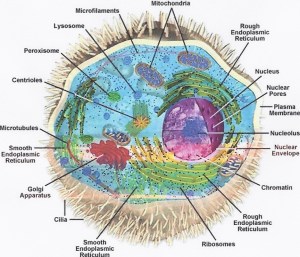
(Click on picture for a larger view, then click on BACK arrow to return to blog)
In the middle of each cell there is another smaller double bag (made from two bi-lipid membranes) that contains the nucleus and DNA. The DNA [Deoxyibonucleic Acid] has encoded instructions on how and when to build the proteins that the cell uses. A DNA strand is made out of two molecular spines twisted into a double helix. Between the spines there can be found only four distinct types of molecules called nucleotides (labeled A,T,C,G) which are arranged in sequenced groups like rungs on a ladder. Groups of three of these rungs are called “codons” (A-T-G1 for example).
The exact sequence of these codons in the DNA strand determines the specific order in which amino acids are chained together (called polypeptide chains) in order to form proteins, thousands and thousands of different varieties. Most of the cell’s machinery and inner structure is formed out of the proteins manufactured from these genetic instructions. One exception to this rule is the formation of an organelle called the Mitochondrion. The Mitochondria (plural) contain their own DNA (called mtDNA) formed in circular strands and they divide and reproduce inside the cell much like bacteria divide, but are controlled and regulated by protein messengers from the nucleus. The Mitochondria’s primary job is to efficiently produce the fuel (ATP) that energizes the micro machines inside the cell that carry out the life processes. There are anywhere from 10 to 5000 Mitochondria in a typical cell, taking up to 50% of the cell’s volume.
YouTube video clips: DNA and RNA (1:45) Protein Synthesis (3:30) Transcription: From DNA to Flesh and Blood (4 min)
In theory, the DNA sequences of instructions (genes) inside any given cell in your body are entirely identical to the DNA sequences (genes) that are in every other cell (with the exception of the reproductive cells). Lately researchers have cloned whole animals by placing the DNA from a single skin cell inside an empty egg cell. The egg cell starts to divide and form a complete organism. The DNA package Inside every ceil in the animal has all of the instructions necessary to form a whole new animal. This begs the question: If the DNA in every cell is identical, then how does there come to be so many different varieties of cells and tissues, brain cells, bone cells, skin cells, liver cells, etc.? The answer to this question is found in the understanding that the individual cells do not act alone they are grouped and bound together into tissues.
The genes activated in the individual cells depend largely on messengers sent back and forth from their neighbors and are specific to where the cells are located in the body. After a while, the chemical (protein) messages sent from the surrounding cells activate the genes that determine the behavior of all the cells that collectively form similar tissue. So in a real sense, the cellular function is determined by the environment in which it lives. Cells, in this sense, “become what they eat.” [Underscore mine]
Cellular differentiation and “stem cells.”
The ability of a cell to change its form and function depending on the protein messengers surrounding it is called “cellular differentiation.” A cell gains its identity (brain, muscle, liver, etc.) from the messengers it finds around it and/or builds inside it. A recent triumph in science came when “stem cells” were discovered. These cells can take the form of any cell they come into contact with (they are undifferentiated cells). If you want to grow new brain cells, for example, then all that is required is to place stem cells in the brain. They will soon transform into new brain cells that fit flawlessly into their new environment as they are programmed to become new brain cells by their neighboring cells. This also happens if they are placed in the liver, heart, etc., the stem cells ultimately become similar to the cells that surround them. It is an interesting fact that the cells in your body can also genetically shift due to the intake of nutrients that you eat. What you eat can literally change the form and genetic function of your cells. There have been experiments with identical twins in mice, both having exactly the same DNA, that were fed different diets. One mouse grew shiny brown fur and was skinny. The other grew light gold fur and was fat and sickly. The only difference between the two mice was in what they ate.”
This point is one to give pause for deep consideration, so I will end this post with it. It is this kernel of truth that emerged out of the fascinating work of world renown Cellular Biologist, Dr. Bruce Lipton. Click on his name below when you have 35 minutes to relax and listen to this brilliant man as he tells his story of how he violated the central dogma that is the pillar of modern biomedicine. This dogma is the concept, formulated by Francis Crick, co-founder along with Jim Watson of the DNA double helix molecule, that the flow of information in biology goes from DNA to RNA to protein, and since you body is made of protein, and protein is coded by the DNA in the cell, which carries your genetic heritage and fingerprint, your behavior is controlled by your genes, and you are a victim of your heredity past. This is not the truth of the matter, but I’ll let Dr. Lipton tell his own story and leave you to your listening and learning pleasure . . . and with this prophetic pearl from Albert Einstein, who wrote: “The field is the sole governing agency of the particle.”
To your health and healing,
Dr. Tony Palombo
Video of Dr. Bruce Lipton (35 min.)
WE LIVE, HEAL AND DIE AT THE CELLULAR LEVEL
My primary job as a doctor is to teach health as I administer healing of dis-ease. Teaching is what I most enjoy. This blog is all about teaching health. The more you understand your body and how it lives at the cellular and molecular levels, the better equipped you are with the knowledge and wisdom to manage your health.
The general heading of this and the next several articles is “The Healing Process,” and I promise that you will understand what it is and how it works at the cellular level when you finish reading the next few blog posts, and it will take several posts to cover the subject matter.
Our subject is the cell. Our objective will be to gain an understanding and deepen our appreciation for the individual cells that make up our body: how they live, facilitate the healing process, and give their lives to maintaining the integrity and homeostasis of the whole body. We stand to learn much about life and about how we might give our lives, dedicate our living, to the healing of the body of mankind, which is, in reality, the Body of the Creator on this planet, and to the building of a healthier community on Earth.
To help tell the story of the life of the cell, I will call upon Dr. Gary L. Samuelson, who holds a Ph.D. in Atomic and Medical Physics from the University of Utah. He has dedicated his career and knowledge to the advancement of promising technologies addressing the major health issues facing mankind today. His study of the science of healing takes him deep into the microcosm of life itself, beyond mental judgement and labeling. Through his eyes we can see clearly the truth of all the elements that go to make up our bodies – the “good” and so-called “bad” – all of which are essential to the healing process and the maintenance of balance in our body’s chemistry. In truth, there isn’t “good and bad,” but simply what is, and it is all good.
The deeper we go into the micro structures of the fabric of creation, where there is yet pristine terrain untouched by human hands, the clearer is the design and function of the creative process . . . and that’s my keen interest. For if we understand the ways of life and the processes by which life brings about creation, we may better understand how we, as creator beings, can work together to bring about a healthier world.
I invite you to sit back and allow your mind to relax its effort to grasp meaning and simply settle down and go deep with me, and with Gary Samuelson, to enjoy a fascinating journey and molecular tour of the human cell. I promise this will be a most enjoyable book review and reading, presented in sections over several blog posts so as to give the reader time to fully digest and process the material. Enjoy the tour!
The Science of Healing Revealed — New Insights into Redox Signaling, by Gary L. Samuelson, Ph.D.
Dr. Samuelson has found a way to take a complex and difficult subject and make it lucid and understandable to the lay reader. It is very rare that someone can convey concepts in science with such clarity and still maintain a degree of accuracy and precision. Dr. Samuelson possesses this unique talent; he explains the body‘s natural healing process on the molecular level in a way that conserves the precision of the science, and yet exposes the technical terms and underlying concepts in clear language able to be understood by any interested reader.
The reader stands to gain a much better view of the science of healing and a good understanding of the basic concepts of how the body‘s healing process works. (Chase N. Peterson, MD, Former President of the University of Utah)
FORWARD
I have always been fascinated by the process of life. How does a blade of grass grow, what determines its shape and function? If it is chopped off, how does it know to grow back? I was sometimes accused of being a strange child, yet my inquiring mind turned me toward the study of science. This love of truth and science stayed with me into my adult life. I soon realized that the mystery of life is one of the most fundamental questions facing us. Shortly after obtaining my Ph.D. in Atomic and Medical Physics, I was set on a path that would ultimately lead me to find the answer to some of these questions and to better understand the overall framework of life processes, approached on the most basic atomic level.
The purpose of this booklet is to help the reader explore and understand this newly emerging science about healing, in a clear, concise, straightforward manner, one that sets a framework around the fundamental principles of the inner workings of the body: explaining how the micro machinery of the body allows the body to thrive when it is well and to heal itself when it is not well. This topic is approached from a first-principles basis, the science is explained as best my language will allow. This book also outlines some emerging cutting-edge science related to the role that redox signaling plays in the healing process.
It is my hope that the reader will be able to follow and comprehend some of the basic, yet incredible, processes that allow us to live and then be motivated to apply this new-found knowledge toward living a healthier every–day life.
INTRODUCTION
Imagine what would happen if our body suddenly lost its ability to heal itself. Within hours, our body would age several years, tissues would degrade, infections would take hold and our body would quickly wither and die. The root of the word “health” is “heal” [to make whole]. The body is constantly healing itself. The body’s ability to heal is one of the most fundamental and essential principles of life. Since conception, our body has been abundantly endowed with this ability. In order to better understand how it does this, we must start by looking at the smallest components of life, the workings inside the living cells that make up our body.
Human cells are generally very small. In a cell’s-eye view, the wrinkles in the palm of your hand are huge cavernous canyons with cliffs and ledges, stretching on for miles. A single hair on the back of your hand is a huge towerinq column of proteins jutting far up, out-of-sight. And yet, even on this tiny scale, the cell is very large compared to the micro machines that perform the processes of life inside the cell. If we were to now dive down inside the cell with a camera that is small enough to see a single strand of DNA, we would see a bustling metropolis of thousands of different types af molecular actors floating around in the salt water, full of activity, extending for hundreds of yards in all directions; proteins being manufactured and folded, delivery systems on microtubules taxiing these proteins around to where they need to go, receptors receiving and transferring messages from inside and the cell and factory-like organelles, hubs where the most complex manufacturing takes place. In the center would be the nucleus containing the DNA spitting out the instructions needed to manufacture and transport all of these micro machines and messengers. Within this thriving buzz of activity is found the mystery of human cellular life.
Our knowledge of these life processes is doubling in less than five years time now. In fact, the emerging science and framework contained in this small booklet have been mostly developed in the last five to ten years and is the result of literally thousands of investigators who have devoted their lives to build such knowledge. The state of our understanding is constantly changing and evolving. Our understanding of the role of oxidants [free radicals] and antioxidants, for example, has done a turn-about in the last five years. The oxidants (made naturally inside the cells) were thought of as an unfortunate toxic by-product of our metabolism, and the antioxidants (also made in the cells) were thought of as the heroes that were made to clean up these evil oxidants and save us from their toxic grip. Our present understanding, however, is more enlightened. We now have come to see that the oxidants, themselves, play a crucial and essential messenger role to maintain basic chemical balance inside and outside of our cells and, in truth, we cannot live without them.
The picture gradually becomes clearer and clearer as time goes along. As scientists put together the edge pieces, the whole puzzle starts to take shape. In this booklet, we will look at some of these pieces and how they fit together. However, the major emphasis of this booklet will be to take an overview of the whole puzzle and set up a framework that will help us understand how the bigger picture is taking form and how we can use this knowledge to make a future of better health and a better life for all.
The first 4 chapters in this booklet will introduce you to basic cellular biology and function; this part is helpful in order to familiarize yourself with the microscopic workings inside your cells and the basic concepts. Some of these concepts will be useful. including the chapter on the immune system, in order to get the big picture. The last 2 chapters, however, contain the real heart of the material and new insights on the body’s natural healing precess. These last chapters should be read carefully in order to comprehend the huge potential benefits offered by emerging technologies.
Tune in to my next blog post for a continuation of the story of the life of the cell and our ongoing exploration into “The Healing Process.” We will take a journey inside the cell. Click on this link for a YouTube video preview: Journey Inside the Cell
To your health and healing,
Dr. Anthony Palombo
To subscribe and manage your subscription, scroll up and click on “Email Subscription” in the right-hand column.
“FAST MEDIA / MEDIA FAST”
(Lengthy but timely and rewarding)
We had an interesting event happen in our family over the Holidays, which I think may be an eye-opener to others besides ourselves. One of our close relatives commented that for the first time their children didn’t know what they wanted for Christmas, and the reason they gave was the eye-opener: for the first time they didn’t have live television in their home, so the kids didn’t know what toys were out there. In other words, they had not been exposed to mass media advertising. Wow! What a testimony to the influence of television in our lives!
A couple of months before the Holidays, a close friend for many years, Dr. Tom Cooper, asked me to read a book he was about to release entitled “FAST MEDIA / MEDIA FAST.” Well, I read the first two chapters and then had to set it aside until after our move to Southern Oregon from the Denver area. I had offered to do a book review on my blog, so to keep my word I recently returned to his book online, more out of my integrity in making good on my offer than out of keenly piqued interest.
Quite frankly, I had already grown somewhat weary of reading all the data the author had presented up front enumerating the many horrible things we are allowing the Media to do to our lives. To be totally honest, in a peculiar way I felt irritated that someone would take icons that are such an integral part of our daily lives – television, movies, the Internet – and suggest we even consider the possibility we are addicted to them. But then, why not, if indeed we are?
Not that he does it without a lot of compassion and understanding – and certainly not at all to bash the media. The data is presented very objectively without the slightest tone of condemnation or criticism. And he does re-count the many blessings in changed lives great programs of mediated material (movies, books, music, TV programs, etc.) have bestowed upon us and continue to bring to our lives as we’ve used them consciously and creatively.
Nevertheless, for me it was akin to the discomfort I felt listening to all the data warning against smoking in years gone by when I once enjoyed the companionship of a cigarette and especially my pipe. Fortunately, I developed an allergy to tobacco in answer to a prayer that the Almighty find a way to take the addiction away from me. It was the addiction that I found limiting and distasteful and not the tobacco.
As it turns out, this is the real message Dr. Cooper conveys is his well-written, thought provoking, and reader-friendly (for an intellectual professor, that is) book: it’s our addiction to and abuse of mediated entertainment and information that the author brings to our attention – as seems typically the case with what we do with the good things life brings to us. We tend to lose our balance and allow ourselves to become addicted, like the proverbial couch potato, to the consumption of our own creations and media of entertainment.
With the added incentive spurred by the story about our relatives whose kids didn’t know what they wanted for Christmas in the absence of live TV in their home, I returned to Tom’s book with renewed interest and a stronger commitment to hear him out all the way and tell my blog readers about this painfully essential and wonderfully important book. So, here it is. . . . a truly important book with a timely message for all inhabitants of the planet.
“FAST MEDIA/MEDIA FAST”
I will start by saying the author, Thomas W. Cooper, PhD, a very personable and sweet-hearted gentle-man, besides being a fellow and fine musician, is a scholar and a Harvard-groomed university professor from Swampscott, Mass. This, in and of itself, speaks volumes about his scholastic dependence on media in his chosen field of service. His publisher, Dr. Michael Gaeta, also a good friend and colleague in the healing arts, introduces his author/friend in the Forward of the book:
In this cacophony of fast media, which make for superficial lives, comes Dr. Cooper’s learned voice, speaking words of wisdom and balance. Brilliant academics are at times disconnected from most people’s daily life experience, preferring complex theoretical frameworks to wisdom sourced in authentic experience. Dr. Cooper is remarkable in that his impeccable academic credentials are balanced by a heart-filled, spiritual, and eminently practical perspective, based in deep life experience.
Now, here’s what got my attention, and I think will grab your’s as well when you read his book. In preparation for his research project on the media’s influence in human affairs, Tom decided to go on a month-long fast from all media. That’s right, he unplugged the TV and avoided the Internet for an entire month. After that, he decided to punctuate his media fast with an additional week-long fast from talking . . . except, of course, when he was spoken to and where it was necessary to his teaching duties. Then he turns around and writes a book sharing his experiences during his fasts, which are really quite interesting, even inviting as they open opportunities in the privacy of personal introspection for honest self-examination.
He then proceeds to lay out not only thoroughly researched and well documented data on the ramifications of the involvement of the media in our lives, both “good and bad,” but, even more helpful, how to go about taking a fast once in a while from our daily media diet, a diet to which we have grown accustomed, perhaps even addicted. He even outlines how to do group fasts for families, classes or any group, and cites whole communities who permanently fast from all electronic media, even telephones and computers, such as the Plain People — the Amish and Old Order Mennonite, the Hutterite, and other subcultures.
Dr. Cooper gives guidelines in the form of symptoms of addiction, to which his readers may readily relate:
Long-term effects of addiction may often be … subtle …. Staying up later each night, or changing one’s job to see the soaps, hiding an earphone line up one’s sleeve in class to hear the conclusion of baseball games, uninterrupted listening to music on the job to avoid boredom, missing appointments to see the next episode, wearing headsets while jogging to blot out the environment, reading a book through meals and events because “I couldn’t put it down,” and showing up late for meals whenever online, are all examples of media hooking us and rescheduling our lives….
He further helps us understand the nature of and distinction between habits and addictions:
One definition of the word habit is “act that is acquired and has become automatic.” Addiction carries the additional connotation “devoted to” or “given up to” or “controlled by” a specific habit. Usually, a habit forms prior to an addiction to that habit. For example, I might consciously eat ice cream periodically late at night. It is only when I eat it consistently and eventually automatically late at night that it becomes a habit. If I become conscious of the habit from time to time and decide to go without ice cream, I “break the habit” at will. When I discover that the habit can no longer be broken easily or will bring discernible consequences (depression, headaches, eating ice-cream substitutes late at night, etc.), the habit has become an addiction.
Similar to books on dieting and fasting from food, FAST MEDIA/MEDIA FAST includes a detailed guide on how to go about a media fast . . . and I must admit the author does so with keen sensitivity and generous support based on his own well earned understanding of the enormous undertaking such a fast could and likely would be for most of us.
To balance it all out, Dr. Cooper cites the many, many ways that the various kinds of media are useful in our lives and how we may return to our consumption of mediated material in a balanced way so as not to be consumed and controlled by it. That aspect of the book I really appreciated and thoroughly celebrate. Here’s a sampling of Tom’s balanced perspective, as well as a taste of the appeal and quality of his writing style, as he writes of and from his own experience:
During my media fasts, I consciously chose to be a creator, not a consumer. I let my mind relax, find different routings and mix new ingredients. By returning to composing and playing instruments I had abandoned, I found a strong river of inner creativity that had been dammed. Although I am not condemning reading, I found that a temporary switch from reading books to writing one restored a full measure of initiative to my work.
This “single switch” in consciousness and in action might be described as living from the inside out, rather than from the outside in. It is characterized by rediscovery of the creative process, which many of us abandon—some forever—usually during childhood. Motivation sharply increases, so much so that virtually any procrastination from the creative process seems a total waste of time. As a child I can recall times when the games, tree houses, sports or skits we were creating became so all-consuming and enjoyable that we could not wait for the next day to begin.
“MEDIA AS FRIENDS, NOT VILLAINS”
When the “single switch” is made from information gluttony to creative communication, one may return to media with new ears, eyes and thoughts. Instead of viewing media as mind pollution, each medium may be employed as a tool of creativity. When the mind and emotions begin to originate creative images and sounds, why not extend that creativity through books, radio, cyberspace, cassettes, or whatever is suitable? Media never have been enemies, in and of themselves. Rather, they simply amplify, disseminate and perpetuate the nature of human consciousness…. To the extent one’s work genuinely originates in the creative process, rather than duplicates conventional programming, it will assist in the liberation rather than enslavement of audience members. The single switch is contagious.
Rarely does one find an author who is as intimately familiar with his/her subject as Dr. Cooper reveals when writing about our “other freedoms” of which we are robed by our subjugation to mediated material, such as movies that bring us to tears against our will every time we see them. I’m a real softy when it comes to joyful scenes in movies like “It’s a Wonder Life,” which Tom sites in his book. As a physician, I was intrigued by his inquiry about the impact of manipulated emotions on our health:
Are these emotions genuine? Do they serve a purpose? To what extent are they voluntary? How do they affect our nervous system? Which ones will be replayed when triggered in the future? Do they upset the endocrine glands? Does this affect our emotional expression in the “real world”? Our emotional stability? No one seems to be asking or answering these questions with authority.
Then there’s the impact of over consumption of television on our children, scary to say the least:
Healy’s 1990 research suggests that television may be related to children’s attention and learning difficulties. In one sense, TV is a multi-level form of sensory deprivation that may stunt the growth of children’s brains. The combined research of Poplowski (1998), Gross (1999), Mander (1978), and Scheidler (1994) remind us that children are not just watching programs or surfing the Net, but are staring into flickering, radiant computer monitors and into fuzzy cathode-ray electron guns.
Johnson (1999) synthesizes this research to show what common sense might dictate: since repetitive screening allows functions of the corpus callosum, cortex, neocortex and limbic system to atrophy, children become more mentally lazy, uncoordinated and underdeveloped. She concludes that what children truly need to develop their minds are purposeful activities using their hands, feet and whole bodies; much exposure to nature and imaginative books; and much less media….
…More than anyone, parents and teachers may explain the difference between the “consumer” and the “creator” to children. The music classes, sports programs, summer camps, family outings, and educational or therapeutic hobbies in which we enroll our offspring pay lifelong dividends.
But, hey folks, our children will inevitably do what we do and not what we say. This is one of my most favorite passages from Dr. Cooper’s book:
However, those who are addicted cannot bring others out of addiction. Since children are watching us for leadership and example, our own habits will loom large to them. In that regard, Ralph Waldo Emerson’s persuasive quotation applies as much to what adolescents see in us as to what they see in the hidden optical patterns in TV, video and computer screens. Emerson stated: “Do not say things. What you are stands over you the while and thunders, so that I cannot hear what you say to the contrary.”
The author sums up his perspective on the benefits of a media fast, such as regaining our five lost freedoms:
…. If there can be media addiction, then there can also be media liberation. But media liberation does not necessarily mean liberation from mass communication. Rather, it means liberation from the rigid attitudes, manipulated emotions, frozen thoughts, assumed identities and truncated perspectives that both contribute to and result in media addiction…. Fasting from any substitute for living can be liberating and empowering. The transition from consumer to creator can increase effectiveness and influence simultaneously.
Then there’s the impact of FAST MEDIA on our sense of meaning and time to keep up . . . with life itself:
“When I was faster, I was always behind” is a catchy refrain from Neil Young’s “Slow Poke.” (Reprise Records, 1999) Young’s apercu suggests that there are unintended and ironic consequences due to speed changes. As a child, I would play the long-playing 33 1/3 rpm records at the faster speeds of 45 rpms and 78 rpms with my friends. We found there were comic, absurd, and even fascinating effects at the faster speeds. But we could no long understand the song’s meaning. Is it the same for society? …If so, the death of meaning, or of the time to find it, could be one of the most tragic unintended effects of the three “uppers”—keep-up, speed-up and blow-up….
Then there’s the role of choice:
The ultimate freedom rests in seeing that one has a choice—to identify with the creator or the consumer. Becoming the creator does not mean mindlessly bashing the media any more than mindlessly digesting it. In fact, one of the easiest, cheapest and most creative ways to publicize your liberation is to create a Web site or printed article about your creations.
Or, as I discovered for myself, start up a blog! It doesn’t matter if anybody follows it either. The real benefit to me is the writing of it, the delightful flow of creative thought and feeling; the creative release of my spirit through the carrier waves of words and ideas. That’s the real benefit of creative use of any and all forms of media.
ALL SOUND ARISES OUT OF SILENCE . . . AND RETURNS TO SILENCE
As a sound healer, I know that the purest and finest moment to connect with the healing current within is the golden moment of silence after the sounds fade out. All sound arises out of silence and returns to silence. True communication arises out of silence. If I have something important to say, let me be quiet first in order to listen and hear what it is. Sound can be a tool for healing when used as a carrier wave for spirit and consciousness. Not just any sound. Sound that arises out of the silence that lies within. The Sufi Hazrat Inayat Khan called that “Music.” Dr. Cooper sees silence as a door to deeper awareness of presence:
Such personal silence emphasizes not so much what is absent, but rather hidden dimensions of self which suddenly become present. I am not suggesting that “enlightenment” or “wisdom” are automatically more available to the silent than to the loquacious. After all, a zombie seems silent; a corpse is still. But if the stillness is purposeful, consistent, focused, intelligent, and deliberately connected to a creative process, a larger awareness can appear, step-by-step.
Finally, as any good author would do, Cooper saved the best until last and brings his reader all the way Home to the inner soundscape of being itself. I personally think that his final chapter is the most inspiring of all. In writing about his speech fast, he crafts timeless words of insight and wisdom:
Naturally, there are other purposes for a speech fast—to enlarge one’s awareness of sound and listening, to learn of and from one’s interior soundscape, and to discover who is present beneath the mask…. …When clichés are liberated from our overuse, we discover in stillness the deeper meaning of “still waters run deep…..” …being is the central ingredient of such depth, and the core of such stillness. Of course, when one stops over-reading and listens…. and indeed invigorates one’s own expression, yet another level of being is known.
What is discovered in these depths, or paradoxically at these heights, might be called being fully present. Fasting from all distraction, including one’s own post-dubbed narrative over the sounds and images of life, allows a sense of anchoring in this ground of being…present. The answer to the question “What is present when my programming is absent?” is “I am.”
IN THE END . . . TRUTH
Fasting from food with only juice and water to purify the body’s cells and fluids is a wonderful experience when done during a speech and media fast, as Dr. Cooper testifies toward the end of his book . . . and he ends his book with a wise suggestion as to the end purpose of any fast:
Our deepest danger is that we would ignore truth and not care, that we would persist in belief and hope, and thus avoid evidence. The longing for truth unites the spirit of education, religion, philosophy, science and journalism. If fast media were to ring true, not attract through the cosmetic, there would be less need for a media fast. It is to that quest for the ongoing discovery of truth, as best we may determine it, that this book, fast and life are dedicated. One and the truth are a majority…. So one of the deepest purposes of a media fast lies in the pursuit, and even the revelation, of truth. What is the truth of myself beneath my programming?
I highly recommend my friend’s book to my blog readers. Order it online today and start the New Year with an enjoyable read on a timely subject.
So, here’s to your good health in 2011 . . . . and how about a media fast to start off the New Year?!
Dr.Tony Palombo
P.S. Tom’s book is available as an E-book (no e-reader necessary) at Gaetapress.com and can also be pre-ordered there whether as a hard copy or paperback. It will be available from the usual sources (Amazon; Barnes & Noble, etc.) this spring.

 HealingTones.org